



The numbers tell one story. The ground tells another.
When Singapore’s Prime Minister Lawrence Wong recently noted that rental costs for retail businesses have declined from 30% to 26% of total operating expenditure between 2019 and 2024, the data was accurate. But ask any retailer along Orchard Road or in a Kuala Lumpur mall whether they feel less pressure, and you’ll hear a different narrative.
Here’s what the aggregate data doesn’t capture: rent’s slice of the pie is smaller primarily because spending on wages, technology, and cybersecurity has ballooned. The pie itself just got more expensive. In Malaysia, retailers are bracing for an additional RM1.3 to RM1.5 billion in annual costs from the new 8% Service Tax on commercial rentals, on top of minimum wage hikes and mandatory EPF contributions for foreign workers. In Hong Kong, core district shop rents may have bottomed out, but they’re still 76% off their peak—cold comfort when footfall patterns have permanently shifted.
This is the great retail reckoning facing South Asia’s key markets. And it demands a fundamental reframing of what a “store” is for.
The Cost Squeeze: By the Numbers
Let’s start with the pressure points across our three markets:
Singapore: Beyond the rental statistics, labour costs continue rising due to structural factors—an ageing population, tighter supply, and deliberate policy choices like the Progressive Wage Model. The government’s message is clear: productivity improvement and business transformation are the sustainable paths forward.
Malaysia: The retail sector faces a perfect storm. The new SST on rentals hits just as the minimum wage rises to RM1,700, EPF contributions for foreign workers commence, and US tariff measures push up costs for apparel, food ingredients, and electronics. The Malaysia Retail Chain Association warns these pressures are “squeezing profit margins, dampening growth plans, and could even reduce corporate tax contributions over time.”
Hong Kong: UBS reports that retail rents remain under pressure, with 2026 rent renewal expected to record negative growth. While Link REIT notes that only 10% of its Hong Kong tenants directly overlap with online retail, the broader trend is unmistakable: cross-border shopping by residents and evolving consumer habits are reshaping demand.
The Counter-Argument: Ecommerce as Strategic Imperative
Now here’s where the data gets interesting—and hopeful.
Singaporeans are already global shoppers. A recent study commissioned by Airwallex found that 98% of Singapore online shoppers are comfortable purchasing from overseas merchants, significantly higher than the 89% global average. Sixty-nine percent make international purchases at least once monthly, predominantly across fashion (75%), skincare (60%), and electronics (56%). And 87% rely on marketplaces like Amazon, Lazada, Shopee, and Taobao—platforms that Singapore brands can also leverage.
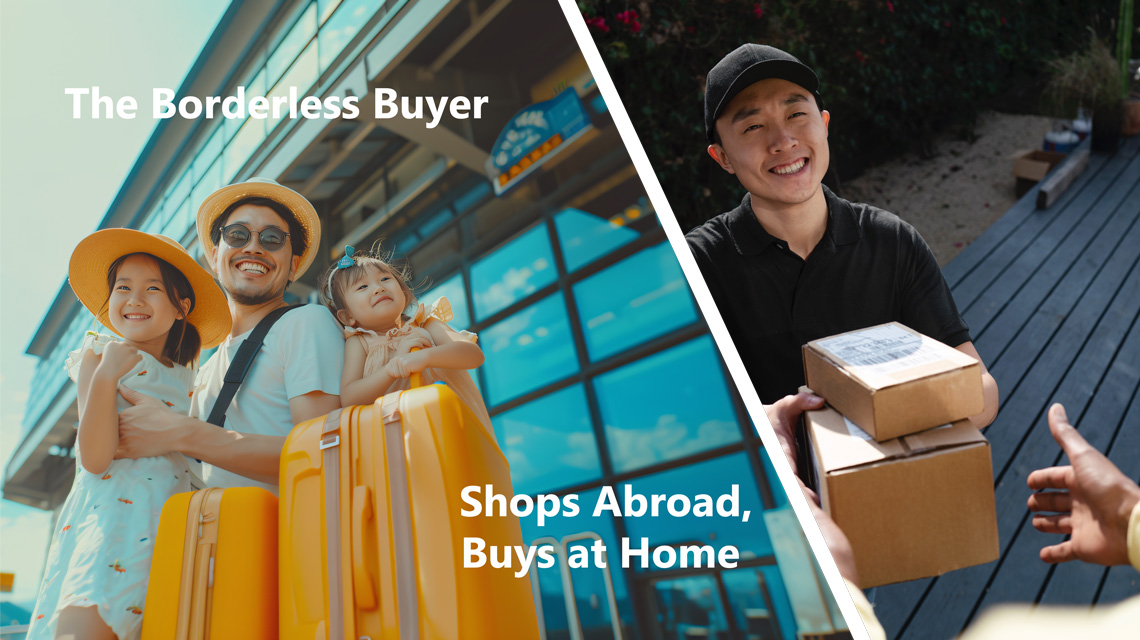
The insight here is simple but powerful: if locals are buying globally, locals can sell globally too.
Hong Kong is already an ecommerce springboard. The territory’s ecommerce market is projected to grow from USD 26.15 billion in 2025 to USD 46.87 billion by 2031 at a 10.21% CAGR. Cross-border activity already delivers 55% of total online sales, fuelled by 95.6% internet penetration and 93.9% mobile access. Government schemes like “E-commerce Easy” under the BUD Fund offer grants up to HKD 1 million per firm, with nearly 1,000 approvals in the first half of 2024 alone. Mobile commerce already accounts for 57% of transactions, forecast to hit 65% by 2027.
Malaysian SMEs are leading in digital adoption. An average of 88% of Malaysian SMEs are adopting digital economy platforms—ecommerce, mobile-commerce, and social-commerce—ranking fourth among nine surveyed Asia Pacific countries. Adoption rates are striking: 90% for ecommerce, 87% for mobile-commerce, and 86% for social-commerce. Crucially, 61% of Malaysian SMEs express confidence that the digital economy will help reduce barriers to finding global customers beyond Asia Pacific.
Quick Wins Sidebar: Getting Started with Cross-Border Ecommerce
For retailers short on time, here’s a simple checklist:
- Audit your current ecommerce platform – Does it support international shipping and multiple currencies?
- Research one target market – Understand platform preferences (Xiaohongshu for China, Shopee for Malaysia, Amazon for US)
- Review your product photography – Does it travel culturally? Would it resonate in Shanghai or Jakarta?
- Speak to licensed cross-border logistics providers – Understand their service capabilities – customs tax, fulfilment, warehousing, and last-mile delivery
- Check government grants – EnterpriseSG (Singapore), BUD Fund (HK), MATRADE (Malaysia)
- Test with one platform – Start small, learn fast, then scale
Voices from the Ground: Real Retailer Perspectives
“Our Orchard Road store pays for itself, but it’s our Shopee Supermarket channel that’s funding our expansion. We never expected online to outperform physical so quickly.”
— Singapore F&B brand owner
“The SST on rentals hurt, but honestly? Our biggest shock was realising 40% of our online customers are from Singapore. We hadn’t even targeted them. They just found us on Lazada.”
— Malaysian fashion retailer
“We joined the BUD Fund ecommerce scheme in 2024. Within 18 months, cross-border was 30% of our revenue. The Hong Kong market is small, but the world is big.”
— Hong Kong skincare founder
“Long queues at cashiers are costing Hong Kong retailers HK$9.8 billion annually. We installed mobile POS and self-checkout, and our conversion rate jumped 15% literally overnight.”
— Hong Kong electronics retailer
Case Studies: Three Regional Brands Winning at Cross-Border
Singapore: Risis – From Heritage Souvenir to Global Luxury
Risis, renowned for its gold-plated orchid jewellery, faced an existential crisis during COVID-19 when tourism plunged and corporate gift sales dived 80%. CEO Verene Ng joined in 2020 and made a “big gamble” on ecommerce.
The Pivot:
- Consolidated physical stores while ramping up social media marketing
- Refreshed designs to appeal to younger consumers (25-35 now make up the largest customer segment)
- Targeted the US market through Instagram content creators
The Result:
- Ecommerce revenue more than doubled from pre-COVID times
- US online sales jumped 121% in one year
- Expanded to Europe (UK, Germany) organically without direct marketing
- Engaged a distributor for China via Xiaohongshu in December 2025
- Trademarked in 37 countries for global expansion
Key Lesson: Heritage brands can reinvent without losing identity—and ecommerce turns local stories into global assets.
Hong Kong: DFI Retail Group x Dingdong – Digitalised Cross-Border Supply Chain
DFI Retail Group (parent company of Wellcome) partnered with Chinese fresh food ecommerce platform Dingdong to build an AI-powered cross-border supply chain.
The Innovation:
- AI prediction system dynamically adjusts inventory based on weather and holidays
- Blockchain traceability with “one product, one code” for full transparency
- Direct sourcing from mainland farms to Hong Kong stores
The Result:
- Six vegetable varieties launched in April 2025 sold over 100,000 kg in one month
- Target sales of HK$100 million in first year
- Expanding to upscale supermarkets Market Place and 3hreesixty
- Planning to extend to Macao and Cambodia
Key Lesson: Cross-border isn’t just about selling—it’s about reimagining supply chains for efficiency and transparency.
Malaysia: LKTEE Enterprise – From Domestic Distributor to 48-Country Exporter
L.K. TEE Enterprise, a Malaysian food and beverage distributor, transformed from traditional wholesaling to global trade through Alibaba.com.
The Journey:
- Joined Alibaba.com in 2022 after domestic market plateaued
- Participated in AGS Lecture training program to master ecommerce operations
- Lowered minimum order quantities to let overseas buyers test small batches
The Result:
- Now reaches customers in more than 48 countries
- Maldives became third-largest overseas market after a small transaction grew into strategic partnership
- Sales through Alibaba.com reached approximately USD $17 million in the most recent fiscal year
Key Lesson: With the right platform and mindset, even traditional SMEs can become global players.
China livestream commerce is projected to hit us$1.14 trillion by 2026. It’s the perfect storm: High smartphone penetration, social-first consumer habits, AI innovation and strong livestream infrastructure

The Omnichannel Reality: Both, Not Either
This isn’t about abandoning physical stores. It’s about reimagining their role.
Successful retailers across the region are treating their physical spaces as experience anchors, brand storytellers, and content studios—while ecommerce becomes the engine turning that investment into returns beyond their shores.
Consider the trends. By 2030, 85% of Asia Pacific consumers expect to buy primarily through social platforms like TikTok and Instagram, with viral trends driving purchasing decisions for 87% of shoppers. DHL’s research finds that 81% of Asia Pacific shoppers now want AI-powered features such as virtual try-ons and smart shopping assistants, and 47% already shop by voice commands.
The infrastructure is ready. Singapore’s ecommerce market continues growing, with 4.7 million shoppers spending roughly SG$7.65 billion annually, up nearly SG$1 billion from 2025. Mobile devices now account for over 70% of purchases . Platforms like Shopify, WooCommerce, Lazada, Shopee, and Amazon offer Singapore merchants pathways to both local and international customers.
The Cross-Border Readiness Checklist: A Self-Assessment for Retailers
| Readiness Area | Key Questions | Green Flag | Red Flag |
| Platform Fit | Which cross-border platform suits your category? (Tmall for premium, Shopee for volume, Xiaohongshu for discovery) | Clear platform strategy mapped to target markets | “We’ll list everywhere and see what sticks” |
| Operations | Can you fulfil international orders within 48 hours? Handle returns? | 3PL partner ready with cross-border experience | Still packing orders manually in-store |
| Content | Do you have culturally adapted content for target markets? | Localised content in pipeline (language, visuals, cultural references) | Using translated English assets with no localisation |
| Compliance | Have you researched import taxes, restrictions, labelling requirements? | Compliance partner engaged or in-house expertise | “Didn’t know we needed one” |
| Payments | Can you accept local payment methods in target markets? | Integrated with cross-border payment providers | Only accepts domestic payment methods |
| Customer Trust | How will you build trust with new international customers? | Strategy for reviews, influencers, and platform trust badges | “Our Singapore reputation should be enough” |
What’s Next (2026-2028): Trends to Watch
AI-powered cross-border logistics: Predictive inventory placement reducing delivery times from weeks to days. The DFI-Dingdong partnership shows how AI can dynamically adjust inventory based on weather and holidays .
Live commerce maturity: Moving from novelty to core channel. TikTok Shop now drives engagement through creator-led content and livestreams, with 87% of shoppers influenced by viral trends .
Sustainability as differentiator: Singapore, HK, and Malaysian brands can leverage trusted, ethical positioning. With 71.1% of Singaporeans concerned about misinformation, transparency and authenticity are becoming competitive advantages .
Payment fragmentation: BNPL, digital wallets, and local payment methods becoming table stakes. 52% of Singapore shoppers now prefer digital wallets like Apple Pay and GrabPay, and 67% use different payment methods depending on whether they shop locally or internationally.
The RTS Link effect: When the RTS Link opens in late 2026, Singapore retailers could see 3-4% sales leakage to Johor. Cross-border ecommerce becomes a hedge against physical footfall diversion.
The New Math: What’s the Cost of NOT Having Ecommerce?
For retailers weighing the investment, consider adding one variable to your rental calculations: the cost of not having an ecommerce extension.
Your real competitor isn’t the brand paying higher rent down the street. It’s the one paying no rent at all, reaching your customers while they scroll.
The Hong Kong market illustrates both the opportunity and the caution. While cross-border ecommerce booms, even pure-play online retailers face “sky-high warehouse rents and last-mile labour costs compressing margins.” Industrial vacancy in core districts fell to 4.1%, driving logistics rental costs up 2.5% year-on-year. Smaller sellers struggle to justify automation investments . Ecommerce isn’t cost-free—but it offers scalability that physical retail alone cannot match.
The Question Worth Asking
The rental conversation across Singapore, Hong Kong, and Malaysia is worth having. But it’s incomplete without asking: how do we make every dollar of rent work harder by connecting it to customers beyond our shores?
For Malaysian retailers facing the SST squeeze, cross-border ecommerce offers a path to diversify revenue streams beyond the domestic market. For Hong Kong brands navigating shifting tourist spending patterns, platforms like Tmall and JD.com provide direct access to mainland Chinese consumers. For Singapore retailers competing with overseas shopping trips, selling to those same destinations while they’re abroad turns a threat into an opportunity.
The retailers who thrive won’t just defend their physical stores. They’ll build omnichannel businesses that serve customers wherever they are—whether down the street or across an ocean.
The data is clear. The infrastructure exists. The consumer appetite is proven. What’s needed now is the strategic, culturally fluent execution.
Sources
- Airwallex & Statista. (2026). Cross-Border Shopping Study Singapore. Via Marketing Interactive. Link
- DHL. (2025). eCommerce Trends Report 2025. Via Marketing Interactive. Link
- Eats365. (2026). The Strategic F&B Playbook 2026 to Scaling Up. Link
- Edgeworks Solutions. (2026). Singapore Retail 2026: Tailwinds vs Headwinds. LinkedIn. Link
- Marketing Interactive. (2026). DFI Retail Group and Dingdong join hands to enhance cross-border supply chain. Link
- Marketing Interactive. (2026). Singaporeans demand trust online as misinformation shapes digital behaviour. Link
- Marketing Interactive. (2026). Study: 98% of Singaporeans shop abroad, but transparency and speed key to conversions. Link
- Marketing Interactive. (2026). Understanding a new breed of shopper: The spendsetters and resisters reshaping Hong Kong retail. Link
- Ninja Van Malaysia. (2025). Budget 2026: Widen SST Exemptions For Logistics Players To Ease Costs for SMEs And Consumers. Disruptr MY. Link
- The Business Times. (2025). Risis strikes gold by targeting young with fresh designs and upping its game online. Link
- The Business Times. (2026). Budget 2026: Retail, F&B rents make up lower share of business costs in last few years. Link
What’s your take? Are you seeing successful omnichannel models in your market? I’d welcome perspectives from retailers navigating this transition.