


Introduction: Why RedNote is Non-Negotiable for Your China Entry
Forget generic social media marketing. In China, consumer decisions are made on RedNote, a hybrid of Instagram and Pinterest powered by authentic, searchable user reviews. With over 300 million monthly active users, primarily high-spending, educated young women, it is the critical platform for building trust (信任, xìnrèn) and driving pre-purchase research. For foreign brands, a strategic presence on RedNote isn’t just an option; it’s the foundation of your digital credibility in China.
This guide cuts through the noise to provide a clear, actionable roadmap for leveraging RedNote to connect with Chinese consumers and grow your business.
Chapter 1: Understanding the RedNote Ecosystem & User Mindset
Chapter 2: Step-by-Step Platform Setup & Brand Page Optimization
Chapter 3: The Content Engine: Creating Notes That Rank and Convert
Chapter 4: Amplifying Reach: The Tiered KOL/KOC Collaboration Strategy
Chapter 5: Converting Interest into Sales: From Traffic to Transaction
Chapter 6: Measuring Success & Key Performance Indicators (KPIs)
Chapter 1: Understanding the RedNote Ecosystem & User Mindset
RedNote is not a typical social feed; it’s a visual search engine for lifestyle decisions. Users come here to discover, research, and validate purchases through authentic experiences shared by others.
- The Core Mechanics:
- Content-First Discovery: The algorithm prioritizes high-quality, authentic notes (posts) over follower count. Great content can go viral even from a new account.
- Search-Driven Intent: Users actively search for terms like “best serum for sensitive skin” or “Paris travel guide.” Optimizing for these search terms is as crucial as SEO for Google.
- Community Trust: Commercial hard-sell is rejected. Success depends on providing genuine value, storytelling, and engaging in the community.
- The User Journey on RedNote:
- Inspiration: Sees a beautiful product photo or a compelling review in their “Discover” feed.
- Research: Clicks through to the brand’s page or searches for related keywords to read more notes and videos.
- Validation: Looks at user comments, checks the credibility of KOLs (Key Opinion Leaders), and browses related “notebooks” (curated collections).
- Action: Clicks the in-app link to purchase (often on Tmall or JD.com) or saves the note for future reference.
Chapter 2: Step-by-Step Platform Setup & Brand Page Optimization
Step 1: Account Verification (认证, rènzhèng)
A verified brand account is mandatory. It grants credibility, analytics access, and ad capabilities. You will need a Chinese business license. This is the first major hurdle where a local partner like MyMyPanda is essential to navigate the process.
Step 2: Crafting Your Brand Profile
Your profile is your storefront. Optimize every element:
- Brand Name: Use your official Chinese name.
- Profile Photo: High-resolution logo.
- Bio (简介, jiǎnjiè): Clearly state who you are, your value, and use relevant keywords (e.g., “French luxury skincare,” ” minimalist home decor”).
- Featured Notebooks (专辑, zhuānjí): Create curated collections like “Best Sellers,” “Customer Showcases,” or “How-To Guides” to organize content and guide visitors.
Step 3: Developing a Content Pillar Strategy
Plan your notes around 3-4 core themes that align with both your brand and user search intent. For a skincare brand, this could be:
- Product Education (Ingredient deep-dives, usage tutorials)
- Lifestyle Integration (Morning routines, travel skincare kits)
- User-Generated Content (UGC) Highlights (Re-posting customer reviews)
- Brand Storytelling (Heritage, craftsmanship)
Chapter 3: The Content Engine: Creating Notes That Rank and Convert
- Anatomy of a High-Performing Note:
- Visuals First: Use 3-9 high-quality, well-lit, aesthetically pleasing images or a compelling short video (under 5 mins).
- Keyword-Rich Titles & Text: Naturally integrate primary and long-tail keywords in the first 20 characters of the title and throughout the copy. Example: Instead of “Our New Serum,” use “亲测! 这款敏感肌抗老精华真的绝了” (“Personal Test! This Anti-Aging Serum for Sensitive Skin is Amazing”).
- Structured Formatting: Use emojis, line breaks, and hashtags (#标签, biāoqiān) to improve readability. RedNote allows rich text formatting (bold, italics).
- Clear Call-to-Action (CTA): Encourage engagement: “Save this for later!”, “What’s your favorite product in the comments?”, or “Tap the link to shop the collection.”
- Mastering RedNote SEO:
- Keyword Research: Use the platform’s search bar to find auto-suggested, high-volume keywords related to your niche.
- Strategic Hashtag Use: Use a mix of 5-8 hashtags: 1-2 broad industry tags (#护肤, #skincare), 2-3 specific product tags (#抗老精华, #anti-aging serum), and 1-2 trending or campaign-specific tags.
Chapter 4: Amplifying Reach: The Tiered KOL/KOC Collaboration Strategy
Working with influencers (KOLs) and consumers (KOCs) is the engine of growth on RedNote.
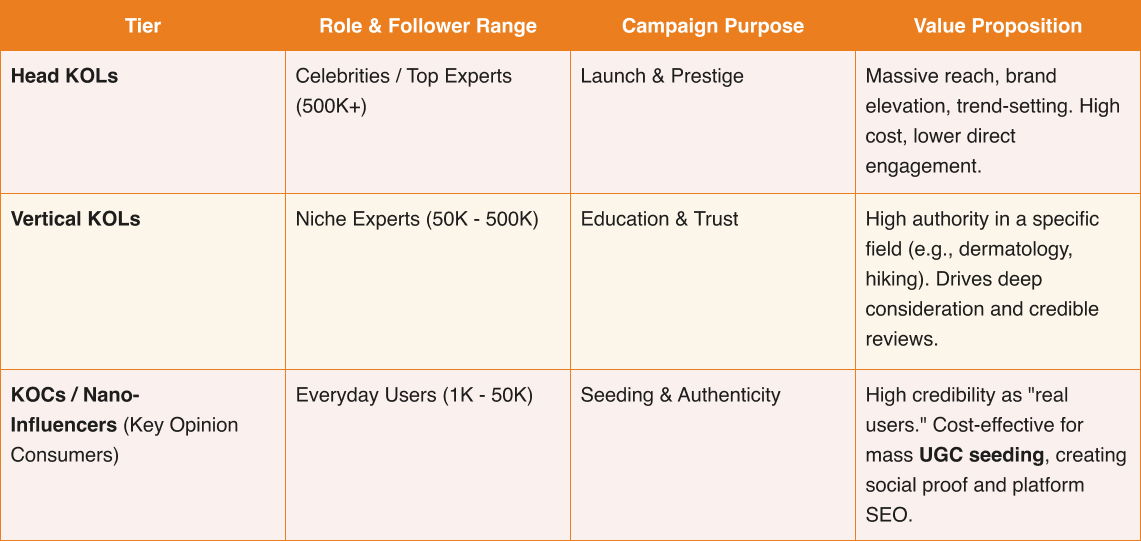
Best Practice: Launch a campaign by seeding product to hundreds of KOCs, partner with Vertical KOLs for in-depth reviews, and potentially cap it with a Head KOL for a major launch event.
Chapter 5: Converting Interest into Sales: From Traffic to Transaction
RedNote has rapidly integrated e-commerce, but the path to purchase is often indirect.
- In-App Storefront: Set up a RedNote Store (RedNote Mall) for a seamless, closed-loop experience. This is ideal for direct sales and running promotions.
- Cross-Platform Funneling: The most common model is to use RedNote as the top of the funnel. Guide users from your notes to:
- Your Website/ Tmall/JD Store: Use the “Note Link” feature to send traffic directly to your product pages on external platforms.
- Your WeChat Private Domain: Offer a free sample guide or coupon to encourage users to follow your Official Account, moving them into a private, long-term relationship for remarketing.
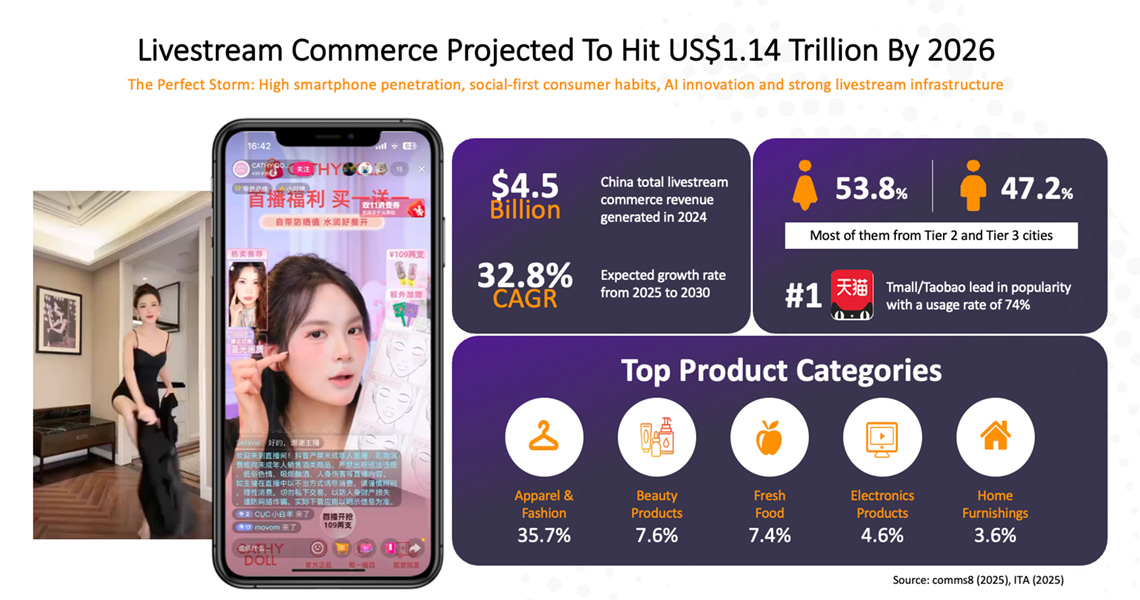
- Live Streaming Commerce on RedNote: RedNote livestreams are trust-driven and detail-oriented, often hosted by KOLs. They focus on in-depth product storytelling, Q&A, and creating a sense of community for high-intent buyers.
Chapter 6: Measuring Success & Key Performance Indicators (KPIs)
Track metrics that align with your goals:
- For Brand Awareness: Note Exposure, Impressions, Saves, Profile Visits.
- For Engagement & Trust: Likes, Comments, Shares, Positive Sentiment Ratio in comments.
- For Sales Conversion: Click-Through Rate (CTR) on Note Links, Cost-Per-Click (CPC), Direct Sales Revenue (via RedNote Mall), and Traffic Referral to Tmall/JD (trackable via platform analytics).
Conclusion & Next Steps
Mastering RedNote requires a commitment to authenticity, a deep understanding of its search-driven community, and a strategic blend of content, influencer collaboration, and smart sales funnel integration.
For foreign brands, the operational complexity—from verification and content creation to KOL contracting and cross-platform integration—is significant. This is where a specialized partner provides immense value.
Ready to transform RedNote into your most powerful channel in China?
Let MyMyPanda’s experts conduct a free audit of your brand’s current potential on RedNote and build your customized, step-by-step entry strategy.
About MyMyPanda: We are China digital growth partners for global brands. Our integrated social media services translate your brand story into effective, platform-native strategies on RedNote, Douyin, and WeChat, driving measurable traffic and sales.
(Source: RedNote/LinkedIn)