
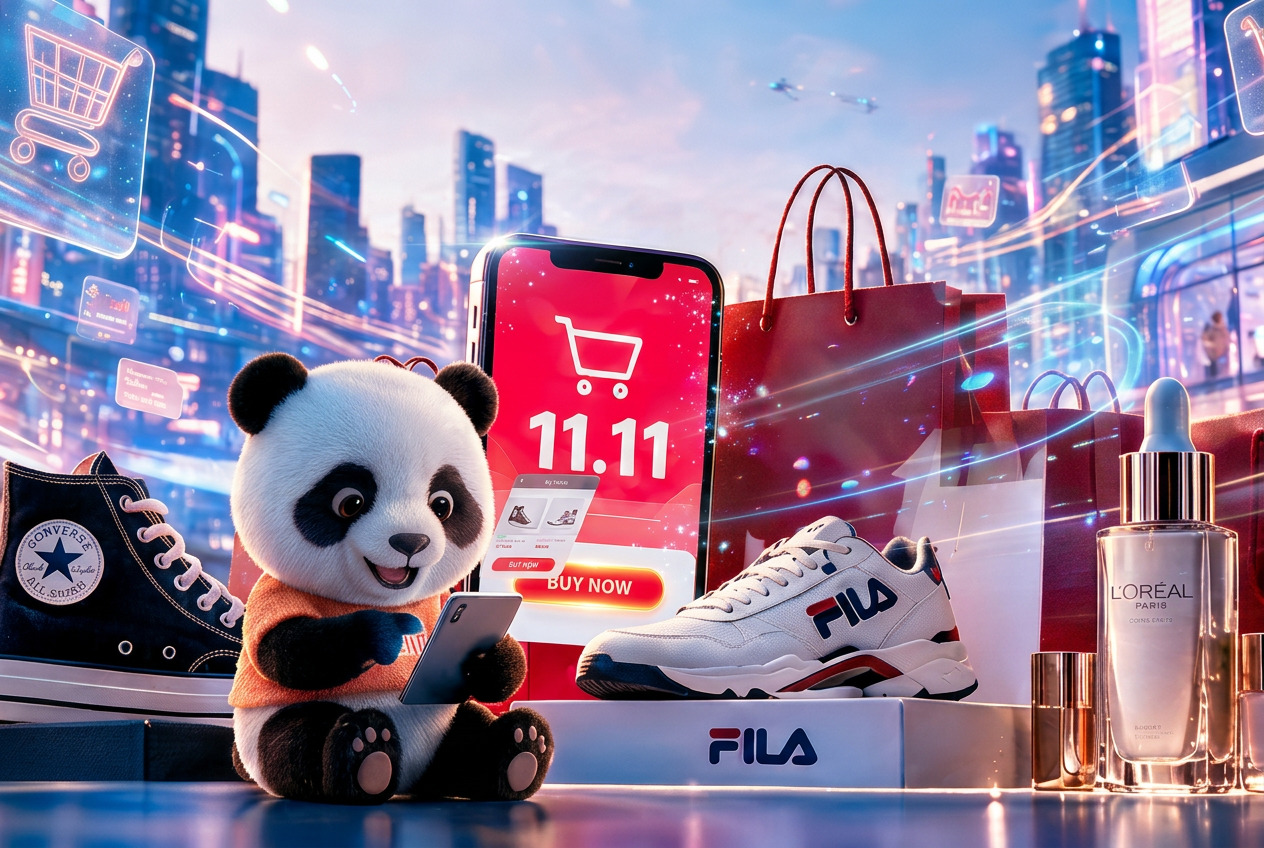
China’s Double 11 (Double Eleven / 11.11) shopping festival remains a major growth engine for international brands, but the 2025 event highlighted a decisive shift in consumer expectations. Shoppers were no longer simply looking for raw discounts; they demanded transparent pricing, reliable delivery, and promotional offers that precisely matched what brands had promised.
According to Syntun data reported by Dao Insights, Double 11 generated an estimated RMB 1.695 trillion in gross merchandise value (GMV) in 2025, representing a 14.2% year-on-year increase (Dao Insights). However, because the promotional window expanded across several weeks, campaign execution became significantly more complex for retailers.
For international brands, the core lesson is clear: a large promotional budget does not guarantee a positive customer experience. Consumer complaints reported during the 2025 festival involving Converse, FILA, and L’Oréal Paris illustrate three specific execution risks: complicated pricing structures, inconsistent discount expectations, and fulfillment delays.
Case Study 1: Converse — When a Pre-Sale Offer Costs More
During Double 11 2025, a consumer complained that purchasing Converse products through a deposit-based pre-sale arrangement ultimately cost more than buying the same items directly without paying a deposit first. The China Consumers Association (CCA) formally highlighted this complaint, resulting in Converse returning the price difference to the affected customer (Flanders-China Chamber of Commerce).
What went wrong?
The issue exposed a gap between the apparent value of a promotion and the final price paid by the customer.
Pre-sale campaigns can involve an initial deposit, a later balance payment, platform coupons and store discounts. When these elements interact, a customer may discover that the supposedly advantageous route is not the cheapest option.
For an international brand, this creates a credibility problem. Even if the price difference is small, consumers may question whether the promotion was genuinely beneficial.
Actionable Takeaways for Brands
-
Test the Final Checkout Price: Rigorously test and compare the total payable amount across pre-sale routes, direct store checkout, livestream offers, and official storefronts.
-
Publish Clear Promotional Terms: Plainly explain deposit rules, payment windows, coupon eligibility, and refund mechanisms in straightforward Chinese.
-
Establish Price-Consistency Audits: Assign dedicated personnel to monitor real-time prices across all sales channels throughout the campaign.
-
Build a Rapid Price-Dispute Protocol: Empower customer service teams to verify purchase paths and issue price-difference refunds without delay.
The key lesson is that promotional complexity should never become the consumer’s responsibility to solve.
Case Study 2: FILA — When a Discount Promise Creates the Wrong Expectation
A second complaint published by the China Consumers Association involved FILA. A consumer spent significant time securing a specific coupon during the brand’s live broadcast after the host stated it offered the festival’s largest discount. However, the following day, the official storefront made higher-value coupons widely available to all shoppers. The complaint was subsequently resolved through a price-difference refund (Flanders-China Chamber of Commerce).
What went wrong?
The primary problem was not simply that a later promotion offered a lower price, but the expectation established by the original marketing claim. When a livestream host describes a coupon as the “largest discount,” viewers make purchasing decisions based on that explicit assurance. When a better offer appears shortly afterward, early buyers feel misled.
This is particularly critical in China’s livestream commerce environment, where urgency, limited-time scarcity, and creator trust heavily influence consumer conversion.
Actionable Takeaways for Brands
-
Define Absolute Terms Precisely: Avoid absolute claims like “lowest price” or “biggest discount” unless the brand can strictly substantiate them across the entire campaign timeline.
-
Coordinate Livestream and Storefront Pricing: Ensure e-commerce managers, livestream operators, and external marketing agencies operate from one single approved master pricing sheet.
-
Schedule Coupon Releases in Advance: Map out when discounts become active, who qualifies, and whether later promotions could accidentally undercut early supporters.
-
Implement Early-Buyer Protection: Establish clear price-protection policies so early shoppers are automatically compensated if prices drop later in the campaign.
Case Study 3: L’Oréal Paris — When Delivery Becomes Part of the Brand Promise
The China Consumers Association also highlighted consumer complaints regarding order delivery delays involving L’Oréal Paris during the 2025 Double 11 peak (Flanders-China Chamber of Commerce).
Even when consumers are fully satisfied with product quality and pricing, logistics bottlenecks can severely damage the overall brand experience.
What went wrong?
Shopping mega-events trigger sharp, concentrated spikes in order volume. Brands must seamlessly align inventory allocation, warehouse packing capacity, courier collection, and proactive customer tracking. If top-of-funnel marketing generates more orders than the fulfillment operation can process, customer dissatisfaction escalates rapidly.
For beauty brands, this risk is heightened during gift-buying seasons and promotional campaigns centered on high-demand sets or limited-edition bundles.
Actionable Takeaways for Brands
-
Forecast Demand by Stock Keeping Unit (SKU): Forecast inventory needs at the individual product and bundle level rather than relying on aggregate sales totals.
-
Communicate Realistic Delivery Windows: Update product pages and transactional notifications to reflect accurate delivery estimates during peak periods.
-
Align Media Spend with Inventory: Scale advertising and livestream promotions only when supported by real-time warehouse stock and packing capacity.
-
Monitor Real-Time Logistics KPIs: Track dispatch speeds, backorders, and cancellation rates continuously throughout the shopping festival to resolve issues before they escalate.
The lesson is straightforward: delivery is part of the customer experience, not a separate operational concern.
What the Three Cases Tell Us About Double 11
Although the cases involved different problems, they point to the same underlying issue: the customer experience can break down when promotional promises are not supported by consistent execution.
| Brand | Reported issue | Practical lesson |
| Converse | Pre-sale purchase reportedly cost more than buying without the deposit | Test the final price across purchase routes |
| FILA | A later coupon offered a better discount than the coupon promoted during a livestream | Coordinate promotional claims and coupon timing |
| L’Oréal Paris | Consumers complained about delayed shipments | Align demand generation with inventory and fulfilment capacity |
The Wider Lesson: Consumers Are Looking Beyond Discounts
The issues raised in these case studies reflect broader shifts across China’s digital retail ecosystem. A report published by People’s Daily’s consumer protection platform in November 2025 cited price disputes—including pre-sale pricing confusion and price-protection failures—as leading causes of festival complaints (People’s Daily). The report also highlighted persistent consumer friction surrounding delivery times, after-sales service responsiveness, and ambiguous promotional rules.
For foreign brands, campaign success can no longer be evaluated by Gross Merchandise Value (GMV) alone. A promotion may generate strong top-line sales, yet erode profitability through customer service overhead, return processing fees, and long-term brand equity loss.
A Practical Double 11 Strategy for International Brands
The following actions can help international brands avoid similar problems in future China campaigns.
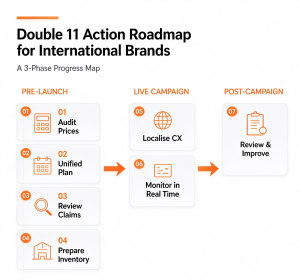
- Audit every promotional price
Before launch, calculate the final payable amount for each relevant combination of deposits, coupons, bundles, platform discounts and livestream offers. Test the process as a consumer would experience it.
- Establish one campaign-wide pricing plan
The brand, marketplace team, livestream agency and other marketing partners should use the same approved promotion calendar. Any changes should be communicated to everyone responsible for selling the product.
- Review all promotional claims
Terms such as “lowest price,” “biggest discount” and “exclusive offer” should be checked against the actual offer terms. If the claim cannot be substantiated, use more precise wording.
- Prepare inventory before increasing media spend
Forecast product-level demand, confirm warehouse capacity and agree on contingency plans for high-demand products. Avoid scaling advertising without considering whether orders can be fulfilled.
- Localise the customer experience
Chinese consumers should be able to understand the promotion, payment conditions, delivery estimates and return process clearly. Localisation should cover the full purchase journey, not just translated marketing copy.
- Monitor the campaign in real time
Track sales, conversion rates, inventory, cancellations, price disputes, delivery delays and customer-service enquiries. These indicators can reveal operational problems that revenue figures alone will not show.
- Review the campaign after Double 11
Compare the planned results with actual performance. Examine not only which products sold, but also which promotions generated complaints, which channels attracted repeat customers and where fulfilment problems occurred.
The purpose of the review is to improve the next campaign rather than simply repeat the same promotional tactics.
Conclusion
Double 11 2025 demonstrated that international brands need more than attractive discounts and high campaign visibility to compete in China.
The reported cases involving Converse, FILA and L’Oréal Paris illustrate three areas that deserve particular attention: transparent pricing, consistent promotional communication and reliable fulfilment.
For foreign brands, the most effective preparation begins well before the shopping festival. Product pricing should be tested, promotional claims should be coordinated, inventory should be planned and customer-service processes should be ready for peak demand.
For brands entering or expanding in China, MyMyPanda can help connect cross-border e-commerce planning with platform strategy, localisation and operational preparation.
The key takeaway is simple: a successful Double 11 campaign is not just about generating orders. It is about delivering on the promises that convinced consumers to buy.
References
-
Dao Insights. “Syntun: 2025 Double 11 GMV Reaches RMB 1.695 Trillion with 14.2% Growth.” Dao Insights, 14 Nov. 2025, www.daoinsights.com/works/syntun-2025-double-11-gmv-reaches-rmb-1-695-trillion/. Accessed 21 Oct. 2026.
-
Flanders-China Chamber of Commerce. “China Consumers Association Highlights Major Complaint Themes During 2025 Double 11 Festival.” Flanders-China Chamber of Commerce News, 28 Nov. 2025, www.flanders-china.be/news/cca-double-11-complaint-report-2025/. Accessed 21 Oct. 2026.
-
People’s Daily Consumer Protection Platform. Analysis Report on Online Retail Consumer Rights and Double 11 Complaint Trends. People’s Daily Online, 20 Nov. 2025, www.people.cn/consumer-rights-report-2025/. Accessed 21 Oct. 2026.