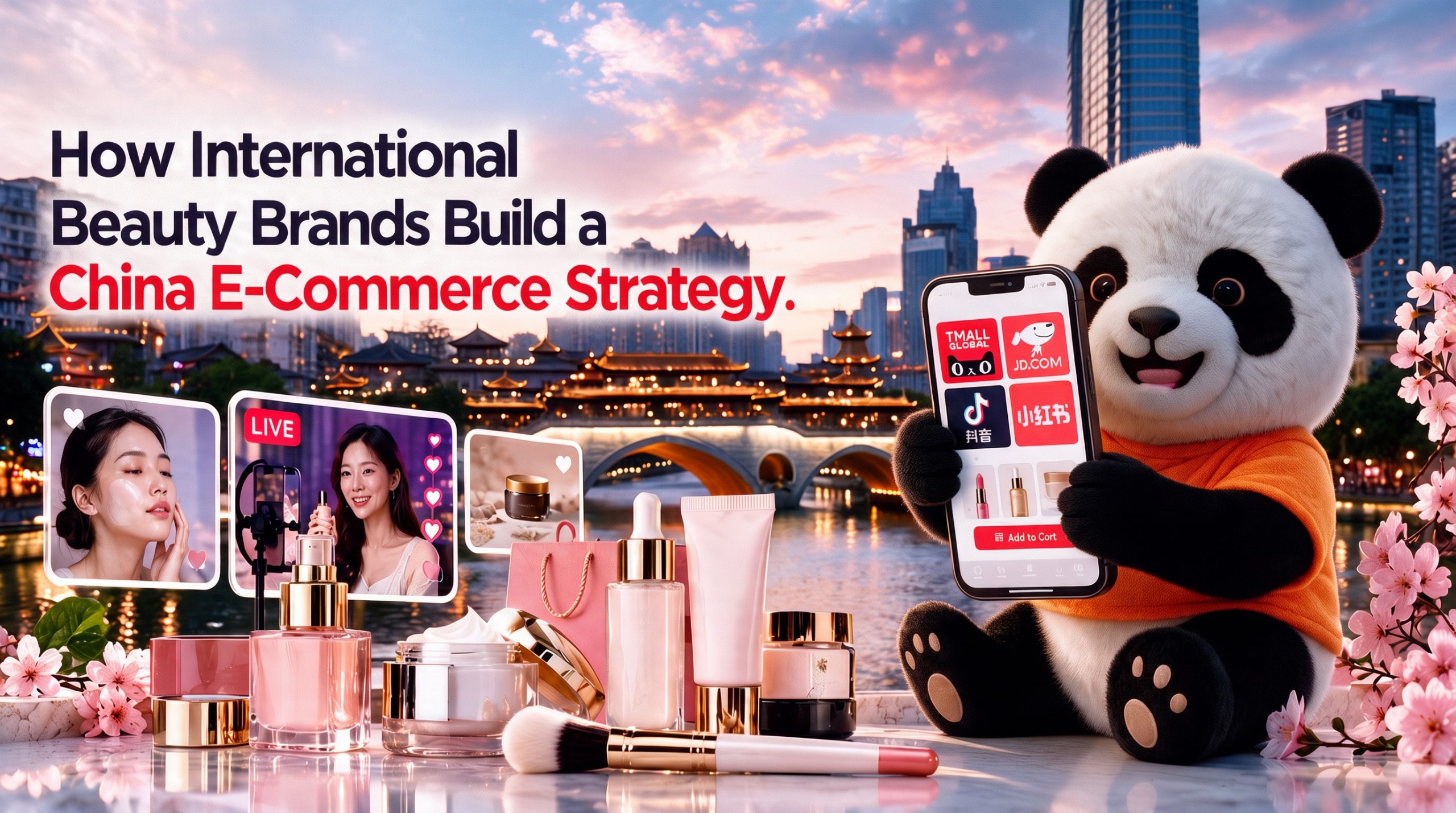
Entering the Chinese market requires more than simply translating an existing website and listing products on a cross-border e-commerce (CBEC) marketplace. Brands must navigate complex consumer preferences, select appropriate sales channels, establish consumer trust, and directly connect digital marketing activities with purchasing opportunities.
While CBEC provides eligible international brands with a regulated, streamlined entry point to reach Chinese consumers (Customs of China, 2018), platform access alone does not guarantee organic demand. The practical experiences of L’Oréal Paris, CurrentBody, and KORA Organics demonstrate three distinct approaches to entering and scaling within the Chinese market:
-
Developing localized products driven by consumer insights;
-
Combining e-commerce with intensive digital product education; and
-
Leveraging founder-led digital launches to build immediate brand affinity.
Case Study 1: L’Oréal Paris — Turning Consumer Insights Into Product Innovation
The Strategy
L’Oréal Paris exemplifies how multinational beauty brands can integrate local consumer data directly into product development and lifecycle management. In 2019, L’Oréal Paris partnered with the Alibaba Tmall Innovation Center (TMIC) to analyze Chinese consumer skincare preferences, evaluating unmet needs, desired functional benefits, and price expectations (China Film Insider, 2019; L’Oréal Finance, 2020).
This data collaboration directly informed the creation of the Revitalift Midnight Cream. According to industry reporting, the product transitioned from initial consumer insight identification to commercial launch in just 59 days (China Film Insider, 2019). Furthermore, L’Oréal reported that 80% of the product’s initial buyers were completely new to the brand ecosystem (L’Oréal Finance, 2020).
Beyond product formulation, L’Oréal Paris amplified its market presence during Singles’ Day (Double 11), China’s premier retail shopping festival, by utilizing livestreaming commerce, immersive digital storytelling, and interactive retail experiences (China Film Insider, 2019).
Why It Matters
This case demonstrates that consumer research can—and should—inform far more than top-of-funnel advertising. Data-driven insights can shape product selection, localized positioning, and the end-to-end shopping experience. International brands that assume home-market best sellers will automatically resonate in China risk misjudging local demand. While L’Oréal’s 80% new-customer acquisition rate highlights the immense potential of targeted product innovation, such metrics depend heavily on execution scale and brand equity.
What Other Brands Can Learn
Smaller beauty brands can apply this core principle without requiring L’Oréal’s scale or resources. Brands can begin by conducting rigorous desktop research into:
-
Competitor listings and pricing models on Tmall and JD.com;
-
E-commerce consumer reviews and pain points;
-
Search behavior and keyword trends on platforms like Xiaohongshu (RED); and
-
Regional product preferences.
Key Takeaway: Use documented consumer evidence to guide market-entry decisions rather than simply transferring an existing international product line and marketing playbook to China.
Case Study 2: CurrentBody — Connecting Beauty Technology With Digital Commerce
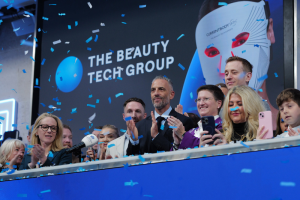
From CurrentBody owner The Beauty Tech Group lands £300 million IPO on London Stock Exchange, https://cosmeticsbusiness.com/currentbody-owner-lands-300-IPO
The Strategy
British beauty-tech retailer CurrentBody entered the Chinese market via Tmall Global in 2019 (Alizila, 2023). Recognizing that beauty devices require a higher consideration threshold than traditional cosmetics, the company invested heavily in localized digital marketing strategies, including intensive livestreaming, Key Opinion Leader (KOL) partnerships, and targeted 11.11 shopping festival campaigns (Alizila, 2023).
Because beauty gadgets involve electrical technology and usage protocols, consumers often require educational content before purchasing—such as explanations of underlying mechanisms, safety assurances, step-by-step tutorials, and realistic outcome expectations. CurrentBody bridged this gap by pairing creator-led product demonstrations with direct digital sales funnels.
Why It Matters
For specialized categories like beauty tech, standard product listings often fail to address a buyer’s nuanced concerns. Clear, accessible tutorials transform unfamiliar technology into understandable, desirable lifestyle additions. CurrentBody’s trajectory illustrates the vital necessity of pairing product education seamlessly with commerce, while continuously refining marketing tactics based on evolving consumer engagement data.
What Other Brands Can Learn
Brands must audit the “education gap” of their product offerings before finalizing their digital content strategies:
-
Skincare Brands: May need to focus education on active ingredients, layering techniques, and customized daily routines.
-
Beauty-Device Brands: Must prioritize live demonstrations, safety credentials, usage frequency guidelines, and clear explanations of technological benefits.
Key Takeaway: Treat education and sales as a unified journey. Embed educational content directly onto product landing pages and track how informational assets contribute to qualified traffic and conversion.
Case Study 3: KORA Organics — Using a Founder-Led Digital Launch
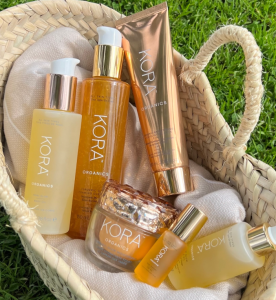
From Instagram page of Koraorganics.
The Strategy
Australian certified-organic skincare brand KORA Organics, founded by supermodel Miranda Kerr, launched its official flagship store on Tmall Global in March 2018 (Alizila, 2018).
To overcome the challenge of low baseline brand awareness among Chinese shoppers, the brand orchestrated a virtual launch event: a 45-minute livestream broadcast hosted directly from Kerr’s home in California (Alizila, 2018). The event attracted over 223,000 live viewers in China, allowing the founder to personally introduce the brand, articulate its clean-beauty philosophy, discuss key organic ingredients, and demonstrate the product range in real time.
Why It Matters
For emerging international brands, a static marketplace storefront is rarely sufficient to establish recognition or emotional resonance. A founder-led launch gives a brand an authentic, humanized voice and a direct channel for philosophical storytelling. While KORA Organics’ livestream audience demonstrated massive top-of-funnel reach, brands must track long-term customer retention and repeat purchase rates to evaluate true commercial viability.
What Other Brands Can Learn
New market entrants should identify what makes their brand story unique and determine how to communicate it with credibility. Depending on the company, this could involve:
-
A founder explaining the brand’s founding ethos and ingredient integrity;
-
A formulation scientist or dermatologist discussing product efficacy; or
-
A trusted beauty creator demonstrating how a product fits into an authentic routine.
Key Takeaway: A high-impact launch creates initial attention and discovery, but sustainable growth ultimately relies on continuous consumer education, responsive customer support, and reliable logistics.
Five Core Lessons for International Beauty Brands
Synthesizing these case studies reveals five actionable principles for brands entering China:
-
Research Before Investing: Understand local consumer preferences, competitor positioning, and price elasticity before committing capital to large-scale campaigns.
-
Choose the Right Entry Channel: Rigorously assess whether Cross-Border E-Commerce (CBEC) aligns with your product category, supply chain readiness, and regulatory compliance requirements.
-
Connect Content With Commerce: Ensure that product education, livestreaming, and creator collaborations form a cohesive customer journey rather than operating as siloed marketing tactics.
-
Localize the Customer Experience: Adapt copywriting, visual assets, brand messaging, and customer service workflows to match the expectations of Chinese digital consumers.
-
Measure Commercial Performance: Continuously monitor product-page traffic, conversion rates, customer acquisition costs (CAC), user reviews, and repeat purchase rates to optimize ongoing investment.
Conclusion
The experiences of L’Oréal Paris, CurrentBody, and KORA Organics prove that there is no single blueprint for success in China. Appropriate market strategies depend entirely on product categories, consumer demand profiles, regulatory constraints, budgets, and long-term business goals.
For international beauty brands exploring expansion, specialized advisory partners like MyMyPanda can help bridge cross-border e-commerce planning with precision platform selection, localization, and digital customer acquisition. Ultimately, building a resilient China strategy requires anchoring decisions in documented consumer data, selecting appropriate sales models, and rigorously tracking commercial performance.
How MyMyPanda Can Help
For international brands, building a creator network and navigating China’s fast-moving e-commerce ecosystem can be difficult without local expertise.
MyMyPanda supports brands through every stage of the market-entry journey—from platform selection and product localization to creator partnerships and cross-border e-commerce execution.
👉 Contact MyMyPanda Today to Create a Strategy for your BrandRequest for your FREE First Consultation.
Speak to our CBEC expert and we’ll advise you the right strategy for your business to enter China.
References
-
Alizila. “Building a China Business: CurrentBody’s Tmall Global Strategy.” Alizila, Alibaba Group, 6 Nov. 2023, www.alizila.com/emily-in-paris-mask-maker-currentbody-china-kol-singles-day/.
-
Alizila. “Miranda Kerr’s KORA Organics Launches in China on Tmall Global.” Alizila, Alibaba Group, 8 Mar. 2018, www.alizila.com/miranda-kerrs-kora-organics-launches-in-china-on-tmall-global/.
-
Canaves, Sky. “How L’Oréal Won Singles’ Day.” China Film Insider, 26 Nov. 2019, www.chinafilminsider.com/loreal-singles-day/.
-
General Administration of Customs of the People’s Republic of China (GACC). Regulatory Framework and Guidelines for Cross-Border E-Commerce Retail Imports. Official Government Portal, 2018, english.customs.gov.cn/.
-
L’Oréal Finance. L’Oréal in Mainland China: Annual Strategic Review and Market Insights. L’Oréal Group Investor Relations, 2020, www.loreal-finance.com/eng/news-event/loreal-mainland-china.